|
|||||||||||||||||||||||||||||||||||||||||||||||||||||||||||||||||||||||||||||||||||||||||||||||||||||||||||||||||||||||||||||||||||||||||||||||||||||||||||||||||||||||||||||||||||||||||||||||
| |||||||||||||||||||||||||||||||||||||||||||||||||||||||||||||||||||||||||||||||||||||||||||||||||||||||||||||||||||||||||||||||||||||||||||||||||||||||||||||||||||||||||||||||||||||||||||||||
| |||||||||||||||||||||||||||||||||||||||||||||||||||||||||||||||||||||||||||||||||||||||||||||||||||||||||||||||||||||||||||||||||||||||||||||||||||||||||||||||||||||||||||||||||||||||||||||||
Biosphere Expeditions
|
|||||||||||||||||||||||||||||||||||||||||||||||||||||||||||||||||||||||||||||||||||||||||||||||||||||||||||||||||||||||||||||||||||||||||||||||||||||||||||||||||||||||||||||||||||||||||||||||
|
A game of cats & elephants: safeguarding big cats, elephants and other species of the African savannah, Namibia. Working holiday volunteering with leopards, elephants and cheetahs in Namibia, Africa.
Price/dates/status
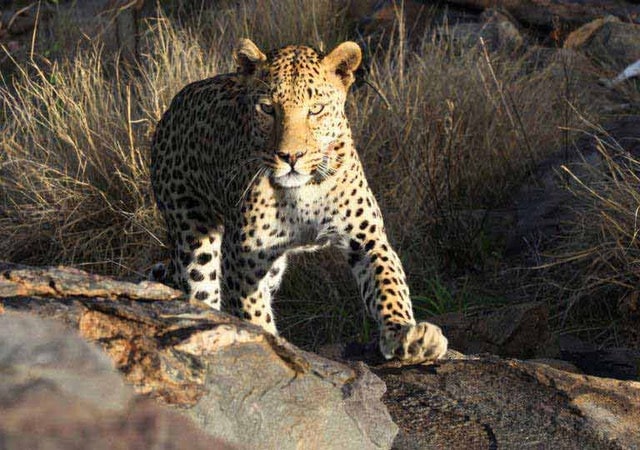
This wildlife volunteering vacation will take you to the beautiful Khomas Hochland (highlands) in central Namibia to conduct a survey of elephants and African cats (mainly leopard, but also cheetah and caracal) and their interrelationship with humans and prey animals (such as giraffe, eland, kudu, zebras, etc.). As part of a small team you will learn some bush skills and then follow elephants and cats on foot or in the expedition Land Rovers to record information about the animals’ behaviours. You will also set camera and live traps, conduct game counts and participate in community education and capacity-building work, which may vary from accompanying groups of school children out on game drives/hikes in the bush associated with conservation talks, to collecting demographic data. You may also assist with cat capturing and collaring. All this in an effort to mitigate human-wildlife conflict and create a sustainable future for all..
DetailsThis wildlife volunteering vacation is all about safeguarding some of Africa’s most iconic animals such as the leopard, elephant and cheetah. Almost all of Africa is under some sort of human impact and Namibia is no exception. Most game species roam on farmland, which is either privately owned or communal, and as such is managed by humans in one way or another. Wherever humans and wildlife come together, conflicts tend to appear, and human-wildlife conflict has been identified as one of the biggest threats to biodiversity worldwide. Sound scientific knowledge is key to mitigate this conflict and to make wise management decisions that balance the need of humans, wildlife and the environment. In a sense lack of knowledge is one of our biggest environmental problems. We believe that knowledge is the key to conservation and the most effective way to mitigate human-wildlife conflict. Therefore this expedition will study the ecology of leopard, cheetah, brown hyaena, elephant and game species with the ultimate goal of using the knowledge gained in conflict mitigation work, for example to improve game herd management and minimise losses amongst local farmers. Aims & objectives Our vision is a sustainable coexistence of humans and wildlife in Namibia. Our mission is to implement, through the acquisition of sound scientific data, important conservation issues in the day-to-day management decisions of landowners and to mitigate human-wildlife conflict on a local and regional scale. To achieve this, the expedition will study the(1) Density, abundance, spatial distribution, home range size and habitat preferences of leopards (2) Abundance, density, reproductive rate and population growth of game species (3) Impacts of elephants on the vegetation and the ecosystem on medium-sized and large game farms. In doing so, the expedition will (A) Focus on capturing leopards, but may also opportunistically capture brown hyaena, cheetah, caracal, etc. for radio collaring and subsequent intensive monitoring of their daily movements, activities and behaviours (B) Evaluate leopard intra-predator interactions, as well as inter-predator relationships between leopard and other predators (C) Collect serology and other tissue samples of all captured animals for genetic and immunological studies (D) Conduct game counts using different methods such as strip game counts, waterhole counts and camera trapping (E) Monitor the local elephant population to investigate its impact on the ecosystem (F) Conduct community work focusing on children of low-income families through cooperation with local schools. Background Namibia is a leading example in the field of nature conservation and the protection of species and ecosystems, not only in Africa, but in the world. 45% of Namibia is under some sort of protection, be it through national parks, private game reserves or communal conservancies. In the latter, wise management allows people to benefit from nature and sustain their livelihoods through consumptive and non-consumptive utilisation of wildlife and other natural resources. In addition, farmland, especially if well managed within the framework of the commercial conservancies, contributes to the rich Namibian biodiversity, providing habitat for impressive flora and (mega)fauna assemblages, as well as intact and functioning ecosystems on a large scale. But here to human-wildlife conflict is a growing cause for concern, especially in the light of growing human populations and an increasingly economically-driven society. Predators preying on livestock (whether in reality or only in people’s imagination) and elephants destroying water wells and habitat (very much in reality) pose a serious problem leading to wildlife persecution and declining populations.But even game farms high with high densities of antelope and other species are not without problems. Most farmers buy in valuable game and erect high, game-proof fences in order to prevent their valuable (re-)introduced animals from escaping. This entails various problems such as genetic isolation, blocking of migration routes, higher susceptibility to diseases and the potential for overgrazing. Management of game farms is admittedly difficult as areas are vast with animals by and large roaming freely within. Even the most basic information such as abundance and reproductive success are generally based on guesswork only. As a result, most game farms are overstocked and therefore overgrazed. Some farms are even highly overstocked and vegetation severely degraded. Another field of our research addresses these problems. Game count methods for farmers developed and tested as part of the expedition’s work; reproduction rate is monitored and used to calculate growth rate on a regional scale; the environmental impact of certain species (such as elephants) is investigated to derive management recommendations. The pan-African problem of human-predator conflict due to predation on livestock (and now, with the booming game ranching industry, also antelope species) is well documented. However, practical solutions on how to minimise the risk of predation (especially in game ranching) are lacking. Our intensive monitoring of a number of large predators will shed light on their predation habits and preferences. Results will be implemented in advanced risk avoidance strategies. Commercial farmland (which is mostly comprised of fairly undisturbed natural areas) comprises about 43% of Namibia. Beside the protected areas, game or cattle farms are thus the biggest ecological units. The Namibian government has social development (infrastructure, schooling, medical services, housing, etc.) as its priority and will thus not spend money on expanding its current national parks. With nature tourism being the global number one growth industry, the private sector has a golden opportunity to participate in and profit from the expansion of conservation land. The expedition’s research area is a relatively large 15,000 ha (150 sqkm) farm that will provide important data that will be used to develop a sample management plan to serve as a blueprint for improved management strategies for other game ranches and conservancies all over Namibia. Study species Leopard (Panthera pardus), African elephant (Loxodonta africana), cheetah (Acinonyx jubatus), caracal (Felis caracal). Other species present
The research area supports a high diversity of plant and animal species. The predominant vegetation type is the Kalahari thorn bush savannah, connected to the grass-dominated dune lands of the Kalahari desert to the south. Typical day
Your typical day begins early in the morning with breakfast at base camp. You will then split into small groups to complete the research tasks assigned to you for the day. Depending on the task, you will return to base camp for a lunch break with time for a siesta during the hottest part of the day, or you may stay out in the field for the day. Everyone will return to base for dinner and on some days you may be out on a night drive. After dinner, we will have talks, discussions and brainstorming/planning sessions for the next day. Capturing and collaring
The capture method of choice will be by cage trap, which is a safe way to capture the target species. You will be involved in setting up the traps on various locations throughout the study area. Cage traps will be checked daily by one team. If an animal is captured, you will inform the rest of the expedition via two-way radio. All expedition participants will then have the chance to join in and assist in or witness the handling of the captured animal. The captured animal will be darted, immobilised and samples for research will be taken. After that, the animal will be fitted with a VHF or GPS collar and given an antidote to be released as soon as it has fully recovered.
Local community work Research area At 825,418 sqkm Namibia is the world's thirty-fourth largest country. However, after Mongolia, Namibia is also the least densely populated country in the world (2.5 inhabitants per sqkm). Namibia is also very rich in wildlife. It holds the world’s largest cheetah population, which is probably the species’ last stronghold world-wide. There are over twenty species of antelope ranging from largest, the eland, to smallest, the Damara dik-dik. The oryx, a striking antelope with long symmetrical horns and distinctive black and white markings is featured on the Namibian coat of arms.The core of the study site is a private game reserve in central Namibia of 15,000 ha (150 sqkm) of very well preserved thorn bush savannah. The study site has a very varied landscape (altitudes from 1500 – 1800 m) with different habitat types and as such contains ideal habitats for all of Namibia’s indigenous mammal species, including elephant and rhino. There are 14 waterholes fairly evenly distributed over the study site. The area has, for many years, not been used for any commercial farming activity, thus leaving the pasture and bush in prime condition. In addition to this, the area has a number of sites of archaeological interest (rock art). Needless to say that the habitat diversity accommodates an equally rich diversity of fauna & flora and there are many typically African species present (leopard, cheetah, brown hyaena, caracal, African wildcat, elephant, southern white rhino, giraffe, sable antelope, waterbuck, greater kudu, eland, Burchell’s zebra, mountain zebra, oryx, blue wildebeest, black wildebeest, red hartebeest, impala, springbok, warthog, common duiker, steenbok and klipspringer and many smaller mammal species). Partners On this expedition we are working with the Namibian Ministry of Environment and Tourism, the United Nations Development Programme (UNDP), the University of Namibia, the Namibia Polytechnic University, as well as other local authorities and communities. Land Rover, Swarovski Optik, Motorola, Vectronic Aerospace, mtc Namibia and the Yves Rocher Foundation also support this expedition.
Maps
Pictures
VideoPlease note that over the years, the project has covered various study sites with different expedition bases, some of which you may see in the videos below. The current study site, expedition base and other conditions are described in the first tabs of this page.
Audio
Biosphere Expeditions' founder Dr. Matthias Hammer talks about how it all works and also about previous work on cheetahs in Namibia.
PressPlease note that over the years, the project has covered various study sites with different expedition bases, all of which are covered in the articles below, so don't be surprised if the descriptions vary. The current study site, expedition base and other conditions are described in the first tabs of this page.
Feedback
“Biosphere Expeditions' support of our research is a continuation of a great tradition where, they have, since 2002, been involved with various wild carnivore research projects in Namibia. Together we aim to research predator (especially leopard & cheetah) ecology to obtain a better understanding of these magnificent, but much-maligned cats predation habits and preferences. Our joint objective is to identify possible eco-friendly game management strategies that could minimise predation on high value game species and thus improve game ranchers' tolerance towards predators.”
“I can’t find French words to tell you how fantastic this stay was for me so you can imagine in English! So thank you for making my dream come true and so memorable. Please just stay the way you are – it’s so good to meet people like you and all the work that you do.”
“This has been the most wonderful period in my life and I am so glad to have had the opportunity to spend four weeks here. Many, many wonderful memories. Thank you Biosphere for making it all possible. All in all a very, very memorable and life-changing experience.” BriefingThe expedition briefing contains very detailed information on this expedition, including instructions on how to get to the assembly point, what you will be doing whilst on expedition and who your expedition leader and scientists will be. Briefings are provided as pdf documents and you must provide a name, country of residence and valid e-mail address to be able to download one. You can access briefings via the Download Centre.
JoinJoin this volunteer vacation / working holiday working with leopards, elephants and cheetahs in Namibia - Go on, you know you want to
|
||||||||||||||||||||||||||||||||||||||||||||||||||||||||||||||||||||||||||||||||||||||||||||||||||||||||||||||||||||||||||||||||||||||||||||||||||||||||||||||||
| ||||||||||||||||||||||||
![]() |
© Biosphere Expeditions, a non-profit organisation and officially accredited member of the United Nations Environment Programme's Governing Council & Global Ministerial Environment Forum | ![]() | ||
| Site by D.V.S | |||