
Home arrow 2-week expeditions arrow Brazil - jaguar & puma

Print

Lost world: studying jaguars, pumas and their prey in Brazil’s Atlantic rainforest.

Summary

Talk me through this expedition

This conservation volunteer expedition will take you to the Atlantic rainforest of Brazil to study jaguars and pumas. You will share this jungle expedition experience with a small international team, alongside the scientist and expedition leader. You will assist local conservation efforts by initiating research in this unstudied area of forest and gathering key information vital for the protection of this highly endangered habitat and its resident species. You will be walking on jungle paths or taking river canoes in densely forested mountains and lowland mangrove wetlands, looking for tracks, kills, scats and the animals themselves and setting camera traps for them. You will also be interviewing local people.


JaguarPumaPuma  Jungle Work  DavidWorkBase camp

Dates
2008: 26 October – 7 November | 9 - 21 November.
Team members can join for multiple slots (within the periods specified).
How long can I join for?

Expedition contribution (land only per slot)
£1090 (approx. €1460 | US$2210 | AU$2350). Please note: expedition contributions are quoted in British pound sterling and the approximate Euro and US Dollar equivalent. Try the XE currency converter for other currencies and an up to date Euro and US Dollar exchange rate.
Where does my money go and other money questions.

Status
Amber: Expeditions of status amber have few spaces available (or are currently in the field). To join them you need to decide soon, so please get in touch to talk about availability.

Terrain
Mixed terrain of forested mountain highlands and lowland mangrove stands, meadows and streams.

Weather expected during expedition
Warm tropical, humid, but not too wet because the expedition takes place during the dry season.

Expedition base
Our base camp is a wooden cabin with a kitchen, storage rooms, toilets and showers, and single or double dome tents pitched inside the forest on wooden platforms and dotted around the cabin.

Team size
Up to 12 team members + 1 scientist + 1 local biologists/guides + 1 expedition leader. 

Skills & prerequisites required
None. You don't need to be a scientist or have any special qualifications - everyone can take part and there are no age limits whatsoever.
Can laypeople really be of help to serious research & conservation projects?

Fitness level required
Ability to walk about 5-15 km per day in mountainous rainforest terrain of up to 1500 m altitude. Those of lower fitness level can monitor wildlife at lower altitude near base camp.
Will it be for me or am I too old/young/unfit?

Team assembly point
Curitiba, a regional centre in Brazil, easily reachable by aircraft or bus from São Paulo.
What about carbon neutrality and other environmental and social impact?
Who books my flights?

And finally
Our expeditions are not about playing the primitive, neither are we a military style 'boot-camp'. Our expedition leader and the local scientist will be by your side and we believe strongly that we get the best out of our expedition teams by making them comfortable, safe and well fed. You won’t be living in the lap of luxury, but we will do our best to make you feel comfortable and at home in your working environment, as this is the key to a well-balanced and successful expedition.

Details


This conservation volunteer expedition will initiate the first-ever conservation project of Atlantic forest jaguar and puma populations and their prey in unstudied rainforest. The Hilaire/Lange National Park study site is known for its outstanding beauty, with densely forested mountain ranges and mangrove lowlands reaching the Atlantic ocean. It harbours one of the few jaguar populations surviving in broad-leaved Atlantic rainforest. Data collected by the expedition will form the basis for the management and protection of jaguars and pumas and their habitats within a highly threatened ecosystem.

Aims & objectives

(1) To initiate ground-breaking research work on jaguars and pumas in Atlantic forest habitat.
(2) To elucidate the distribution of pumas and jaguars and assess habitat quality.
(3) To assess the impact of human activity on local mammal biodiversity.
(4) To initiate a conservation project to preserve a source population of the southernmost population of jaguar in the Atlantic forest.

Background

No-one knows how many jaguars and pumas there are in the Saint-Hilaire/Lange National Park and its surrounding areas (referred from here on as Saint-Hilaire/Lange NP area), an important refuge where these two cat species probably still survive in numbers. It is vital that this southernmost population of jaguars in the broad-leaved Atlantic rainforest is protected, as it contains the source population from which jaguar numbers could be re-established. Biosphere Expeditions will assist local conservation efforts by initiating research in this unstudied area of forest, gathering key information vital for the protection of this highly endangered habitat and its resident species.

The Saint-Hilaire/Lange NP area is dominated by the Atlantic rainforest of Brazil, one of the most endangered ecosystems on Earth. It is hard to overstate the importance of this ecosystem in terms of conservation. Declared a UNESCO World Heritage Site in 1999, most scientists rank the Atlantic forest as one of the top three priorities for global conservation efforts. Very little of the Atlantic forest remains, and what does is highly fragmented. Despite this, it still maintains extremely high levels of diversity and endemism.

The forest, which once spread along the Atlantic coast and much of southern Brazil, is now reduced to fewer than 8% of its original extent because of intensive human occupation, beginning with sugar cane plantation in the 1500s and later coffee plantations.

Despite the Atlantic forest’s grim past, the outlook for the future looks bright, thanks to the availability of new conservation instruments, funding mechanisms and a large body of well-trained conservation professionals. There are significant areas of the Atlantic forest left that are still intact and harbour many large mammalian species with considerable habitat requirements. It may be possible to maintain or even improve the quality of these habitats, but to date there is a serious lack of information on how to recover biodiversity to original levels in a human-dominated landscape.

To address this lack of information, the expedition’s research work also aims to assess which human occupation strategies are most compatible with the concurrent survival of large mammals, with special emphasis on the habitat quality for the jaguar and puma. Few areas are left, which have remained untouched and these are of high importance for their intrinsic value as a source of species, and as a model for recovering disturbed areas.

Study species

Species that are relevant to the surveys will be the puma (Puma concolor), jaguar (Panthera onca), tapir (Tapirus terrestris), collared peccary (Pecari tajacu), paca (Agouti paca), white-lipped peccary (Tayassu pecari) and red deer (Mazama americana), all of which are threatened to some extent at national level and of special relevance as flagship residents of a highly threatened ecosystem.

The coastal rainforest is also home to a considerable array of animal and bird species and we may encounter the following mammals: howler monkey, capuchin monkey, various armadillo species, common opossum, tayra, jaguarundi, ocelot, capibara, southern river otter, anteater and various deer species. All in a subtropical rainforest environment.

Typical day

Activities are usually decided the night before and then confirmed in the morning, depending on the weather. The whole set-up of the expedition is quite flexible so that you can participate according to the weather conditions, your skills and general fitness and how you feel on the day.

On some days you may have an early start, whilst on others you may be on a night shift walking a survey trail. A cook will prepare all meals at base camp, where you will return to eat, rest and have a shower. On some days you will spend the whole day in the field and will be given a lunch pack.

Research area

Brazil is located on the Atlantic coast of South America and is the largest country on the continent. Two thirds of Brazilian territory is located within the Amazon basin. In addition to the Amazon, the Atlantic rainforest extends for about 3,500 kilometres along the coast with an area of over one million square kilometres. The Atlantic forest ecosystem is recognised as one of the most unique habitats on Earth, with numerous endemic species. It is one of the so-called world “hotspots” of biodiversity, with over 400 vascular plants per hectare, 50% of which are endemic. Animal diversity is also high: 215 species of mammals have been recorded, 73 of which are endemic; and out of a total of 183 species of amphibians, 91.8 % are endemic. Although biodiversity is very high, the status of many individual species is precarious. A recent estimate showed that 171 out of 202 species of vulnerable animals from Brazil are from the Atlantic forest.

The study area is situated on the edge of the Saint-Hilaire/Lange National Park in southern Brazil, comprising 25,000 hectares of protected Atlantic forest and named after the French naturalist Saint Hilaire, and the Brazilian environmentalist Roberto Ribas Lange. The name is expected to be changed to ‘Serra da Prata’ (Silver mountain range), as national parks in Brazil are no longer allowed to carry names of people or towns. Early settlers crossed the mountain range in search for silver mines, inspiring the new suggested name. The park was created quite recently (in 2001) and as such is not well known or studied.

Maps

Map 

Map of the region and study site.

Google map 


Google map of all Biosphere Expeditions study sites, expedition bases, assembly points, office locations, etc.


Pictures

Jaguar

Jaguar caught in a camera trap.


Puma

Puma caught in a camera trap.

Tapir

Tapir
(another primary study species of the expedition).

Red brocket deer

 Red brocket deer
(primary study species).

Paca

Paca
(primary study species).

Collared peccary

Collared peccary
(primary study species).

Ocelot


Ocelot caught in a camera trap.

Capybara

Capybara.

Armadillo

Armadillo.

Frog

Tree frog.

Blue-headed parrots

Blue-headed parrots.

Butterflies

Butterflies at base camp.

Moth at base camp

Moth at base camp.

Ocelot tracks near base camp

Ocelot tracks near base camp.

Study site  

Study site.

Jungle 

Study site.

Jungle 

Study site.

Jungle

Study site.

Work 

Recording a puma track.

Work

Setting a camera trap.

Work

Cutting a transect trail.

Work

Marking a transect trail.

Work

 Recording data.

Work

 Interviewing locals.

Visiting a local school to talk about jaguar & puma

Visiting a local school to talk about jaguar & puma.

work6

 Ready for a boat survey.

Work

Boat survey.

Work

Boat survey.

tracktrap

Setting a track trap.

Rest

 Having a rest in the forest.

Work

Data entry.

Data entry enjoying a caipirinha, the national drink of Brazil

Data entry enjoying a caipirinha, the national drink of Brazil.

Base


Expedition base: the cabin.

Base

Expedition base: dome tent (and expedition leader's hammock in the background).

Base

 Expedition base: dome tent.

Base

 Our field cook hard at work. 

Base

Dessert from the forest.

base6

In the evening.

Base

 Chilling out at base.

Rest

Chilling out near base.

Base  

 Rest after a hard day's work!

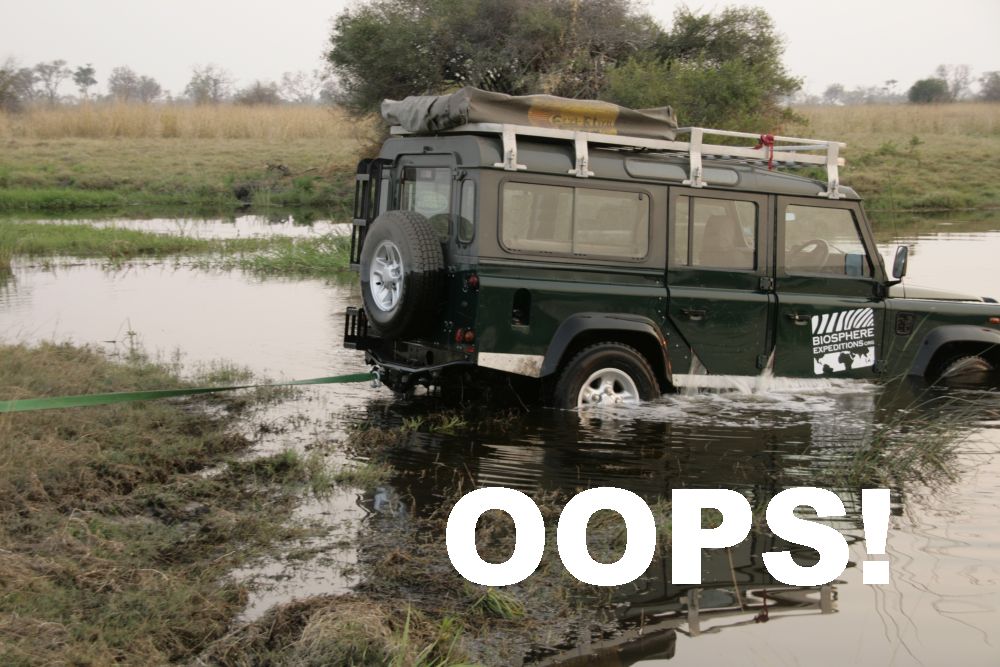
Expedition Land Rover in action

Expedition Land Rover in action.

Expedition Land Rover in action

Expedition Land Rover in action.

Expedition Land Rover in action

Expedition Land Rover in action.

An expedition team

An expedition team.


Video

 Setting a camera trap for jaguar & puma.

Research work: gearing up; working with GPS; walking, cutting and marking trails; tracks and track traps; boat surveys; interviews and data entry.

Landscapes of the Atlantic forest study site.

YouTube Watch more Brazil expedition
clips
on YouTube.  

Press

Universum Auf der Spur des Jaguars
in German
pdf View article 984.82 Kb


Feedback


"Biosphere Expeditions' initiative was crucial in initiating our jaguar and puma conservation programme in the Atlantic rainforest of Brazil. Without them this programme would not exist. Their approach is a perfect match between research and conservation and we are delighted to work with them."
Dr. Marcelo Mazzolli, Projeto Puma & local scientist, Brazil.

"All I can say is: GO! I had a really great time with them. They are well organised, they take care of you, I always felt safe and part of the research effort, the food was great, as were the people and nature. I'm already saving up for my next expedition."
Sabine Akermann, 44.

Feedback from team members about their experiences and
reasons for coming (on/from various expeditions).

“Congratulations for the Biosphere Expeditions idea and the way the staff carries it through with their enthusiasm. I came across you on the internet by chance and your information materials and the way my questions were answered persuaded me to dare come on the expedition. Once in the field my expectations were more than fulfilled. The team was great, as was the food and I gained a real insight into how wildlife research and conservation works on the ground. I'll be back!”
Helmut Schneilinger, 57.

"The Brazil expedition was such a wonderful experience for me. Spending two weeks in the rainforest almost virtually cut off from the outside world was a huge change from normal life. We were very well looked after by the Biosphere team who made sure we had every opportunity to fully participate in all the expedition activities. One day you would be setting camera traps and the next paddling in a canoe to survey another area. The food was freshly cooked everyday and in plentiful supply. Evenings were spent socialising by lamplight or simply relaxing to the jungle sounds. We were made to feel fully involved at all times and that what were were doing was making a real contribution to local conservation."
Martyn Roberts, 50.

“I liked the mixture from the staff of being serious and also lots of fun – and the way they took care of us.”
Helge Eek, 52.

“I really enjoyed the level of involvement, diversity tasks and also meeting local people as part of our work.”
Sharon Flloyd, 43.

“A fab place with fab people; loved it. A great adventure!”

“Great experience. It will be part of my life forever.”

Briefing


The expedition briefing contains very detailed information on this expedition, including instructions on how to get to the assembly point, what you will be doing whilst on expedition and who your expedition leader and scientists will be.

You can access briefings via the Download Centre.

Sign up


Go on, you know you want to Wink

Sign up here.


Feedback

Feedback


News

NEW 2008 SLOT  (9 - 21 Nov) to cope with demand for Brazil 2008.
NEW 2008 SLOT (7 - 19 Dec) to cope with demand for Peru 2008.
NEW 2009 DATES  (March) for Honduras 2009.
NEW 2009 DATES (August - October) for Caprivi 2009.


Awards


Newsletter


© Biosphere Expeditions, a non-profit organisation  
Terms | Sitemap
Site by D.V.S