
Home arrow 1-week projects arrow Slovakia - wolf & lynx

Print

White wilderness: winter wolf and lynx tracking in the Tatra mountains of Slovakia.

Price/dates/status

Talk me through

National Geographic

This expedition was honoured in National Geographic
Adventure magazine's "Best New Trips
" list.

This ecovolunteer opportunities project will take you to the Tatra mountains of Slovakia to monitor wolf & lynx populations and their interrelationship with prey species. You will be part of a small international team, working with the local scientist and contributing to an important piece of research. You will track large carnivores through snow in the forest and meadow habitats of the mountains (using snow shoes, which are easy to use). You will also learn how to recognise and record other signs of their presence, such as scats and scent markings, collect samples to study their diet and for genetic analysis, and survey prey species, all in an effort to create a sustainable future for these icons of the Carpathian wilderness and to promote greater understanding of their role in European ecosystems.

Wolf
Lynx Brown bear BaseLandscape 

PRICE = Expedition contribution (land only per slot)
£960 (approx. €1050 | US$1570 | AU$1690).
Please note: expedition contributions are quoted in British pound sterling and the approximate Euro and US Dollar equivalent. Try the XE currency converter for other currencies and an up to date Euro and US Dollar exchange rate.
Where does my money go and other money questions. 

Dates
2010: 30 January - 5 February | 6 - 12 February | 13 - 19 February (6 nights).
Team members can join for multiple slots (within the periods specified).
How long can I join for?

Status
Red: Expeditions of status red have no spaces available (or have already been to the field). If an expedition is full already, you may have the option of going on a waiting list.

Terrain
Alpine peaks, cliffs with meadows and forests on the lower slopes.

Weather expected during expedition
Cold mountain weather with snow cover and temperatures averaging +5 to -10o C.

Expedition base
The expedition base is a comfortable cottage in the forest with showers and all modern amenities.

Team size
Up to 10 team members + 1-2 local scientist + 1 expedition leader.

Skills & prerequisites required
None. You don't need to be a scientist or have any special qualifications - everyone can take part and there are no age limits whatsoever.
Can laypeople really be of help to serious research & conservation projects?

Fitness level required
Ability to walk about 10 - 20 km per day in hilly to mountainous terrain with snow cover. If required, you will be given instruction in the use of snow shoes, which are not difficult to learn how to use. Those with existing cross-country or ski mountaineering skiing skills are welcome to bring their equipment as we may make use of their existing skills (in groups with the expedition leader and/or scientist).
Will it be for me or am I too old/young/unfit?

Team assembly point
Bratislava, the capital of Slovakia.
What about carbon neutrality and other environmental and social impact?
Who books my flights?

And finally
Our expeditions are not about playing the primitive, neither are we a military style 'boot-camp'. Our expedition leader and the local scientist will be by your side and we believe strongly that we get the best out of our expedition teams by making them comfortable, safe and well fed. You won’t be living in the lap of luxury, but we will do our best to make you feel comfortable and at home in your working environment, as this is the key to a well-balanced and successful expedition.

Details

Aims & objectives

(1) To ascertain total numbers of wolves and lynx in the study area.
(2) To ascertain wolf and lynx group size, movements and activities.
(3) To ascertain numbers of prey species within the carnivore habitat.
(4) To assess predatory impact of wolves and lynx on their prey populations.

Background

With higher numbers of wolves, lynx and bears in Slovakia since the second half of the 20th century, conflicts with local people have come to public attention. Negative aspects of their presence often make news headlines, promoting a heightened sense of fear. Wolves sometimes cause considerable losses to livestock, particularly sheep, and hunters think they will wipe out game stocks. Lynx and wolves have also been accused of reducing numbers of other threatened animals, such as the Tatra chamois. Such conflicts often lead to calls for culling, which is the approach that almost eradicated carnivores from Slovakia in the past. The concurrent emergence of new threats to wildlife and habitats presented by economic development means that a more sensitive approach is required, one based on a sound understanding of the place of carnivores in ecosystems, but also considering their impact on local people. As very little modern scientific work has been done on large carnivores in Slovakia, there is much to be done in order to achieve these goals.

Study species

Grey wolf (Canis lupus), lynx (Lynx lynx), red deer (Cervus elaphus), wild boar (Sus scrofa), roe deer (Capreolus capreolus), red fox (Vulpes vulpes), brown hare (Lepus europaeus).

Other species present, all in an environment of alpine meadows, cliffs and forests: brown bear, golden eagle, raven, pine marten, stone marten. All in an environment of alpine meadows, cliffs and forests.

Typical day

Activities are usually decided the night before and then confirmed in the morning, depending on the weather. The whole set-up of the expedition is quite flexible so that you can participate according to the weather conditions, your skills and general fitness and how you feel on the day.

In the morning the expedition team will divide into sub-teams of two or more people, who will be assigned a route to cover during the day. You will then be taken to the start of your route, if it is away from the base camp, and set out on foot, snow shoes (or cross country or mountaineering skis) according to snow conditions and your preference & existing skills. When you find tracks or other signs of wolves, lynx or other landmark species, you will record them using GPS receivers, cameras and notebooks. In the case of wolves and lynx, you will then follow the tracks for as far as possible in order to collect further data on their movements and activity. On other days you will also assist in a systematic assessment of prey numbers. You will return to base in the evening to log our results and discuss findings.

Research area

The Western Carpathian mountains cover much of northern Slovakia, and spread into the Czech Republic with Moravia to the east and southern Poland to the north. They are home to many rare and endemic species of flora and fauna, as well as being a notable staging post for a very large number of migrating birds.

Within these western Carpathian mountains are several national parks, the earliest of which was established in 1949. The parks are dedicated to conserving the unique alpine and subalpine ecosystems found in the Tatra mountains, amongst which are the tallest peaks in Europe between the Alps and the Caucasus. The highest mountain is Gerlach at 2655 m.

Once covered by glaciers, which left behind over 100 mountain lakes (also known as 'tarn', or 'pleso' in Slovak), these mountains are home to some 1300 species of plants, about 40 of which are found nowhere else. Chamois, brown bears, lynx, eagles, wolves and marmots are some of the 170 species of vertebrates found.

Forest cover in the area is 90%. The main trees are Norway spruce, beech and fir. The timberline is composed of Norway spruce and in some places beech, between 1400 and 1500 m. Above the timberline is a zone of dwarf pine, then a habitat of alpine meadows and cliffs. The forests are managed and pastures in the valleys are used for grazing livestock, mainly sheep and cattle. 

Partners

Our main partner for this project is the Slovak Wildlife Society (SWS), a non-profit Anglo-Slovak initiative for the conservation of Carpathian wildlife. We also work closely with local communities & schools. Corporate support comes from Land Rover & Swarovski Optik.

Maps

Map Slovakia

Map of the region and study site.

Map

Map of the Tatra mountains and base (red arrow).

Google map

Google map of all Biosphere Expeditions study sites, expedition bases, assembly points, office locations, etc.


Pictures

Grey wolf

Grey wolf.

Wolf track Wolf track.
Wolf tracks & snow shoes Wolf tracks & snow shoes.
Picture courtesy of Robin Rigg.
Lynx

Lynx.
Picture courtesy of Robin Rigg.


Lynx Lynx.
Lynx tracks Lynx tracks.
Picture courtesy of Robin Rigg.
Red deer on an alpine meadow Red deer on an alpine meadow.

Chamois

Chamois.

Brown bear

Brown bear.

Wolf track

Bear track.

Wild boar

Wild boar.
Picture courtesy of Robin Rigg.

Marmot

Marmot.

Fire salamander

Fire salamander.

Mountain landscape in the study area

 Mountain landscape in the study area.
Picture courtesy of Robin Rigg.

Mountain landscape in the study area

 Mountain landscape in the study area.
Picture courtesy of Robin Rigg.

Mountain landscape in the study area

Mountain landscape in the study area.
Picture courtesy of Robin Rigg.

Mountain landscape in the study area

  Mountain landscape in the study area.
Picture courtesy of Robin Rigg.

Expedition base with a bit of snow :)

Expedition base with a bit of snow Smile

Back of expedition base Stream running past expedition base.
Dinner time

Dinner time!

Training day - learing how to use binoculars Training day - learing how to use binoculars.
Training day - learing how to use GPS. map & compass Training day - learing how to use GPS. map & compass.
Picture courtesy of Robin Rigg.
On a survey


On a survey.
Picture courtesy of Robin Rigg.

Recording a wolf track Recording a wolf track.
Picture courtesy of Robin Rigg.
Recording a wolf track Recording a wolf track.
Picture courtesy of Robin Rigg.
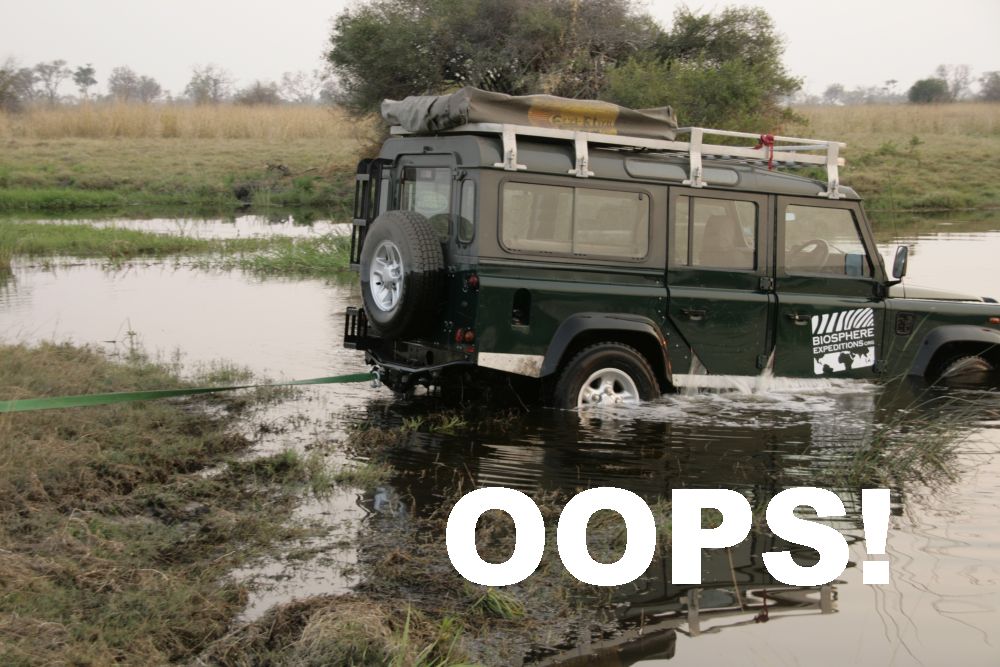
Land Rover on its way to a drop-off point in the forest

.Land Rover on its way to a drop-off point.

On the way to a survey site

On the way to a survey site.

Radioing in at sunset

Radioing in at sunset.

More images on Biosphere Expeditions'  Picasa Web Album


Feedback


"I am very glad to work with Biosphere Expeditions here in Slovakia, because they help me to conduct real scientific research, rather than guide wildlife watching tours. Without Biosphere Expeditions this large-scale and urgent conservation effort on lynx, bears and wolves would not be possible."
Robin Rigg, Slovak Wildlife Society, Slovakia.

"I enjoyed my expedition very much – the group was great. It was also great to meet people from different backgrounds and nationalities, and the different ages did not matter at all. The staff were excellent, good fun and kind. I admire the extremely hard work they put in to make this work so well for everyone."
Cathy Ryan, 49.

"Fantastic opportunity and a fantastic expedition."
Kyley Chapman, travel journalist, 32. 

Feedback from team members about their experiences and
reasons for coming (on/from various expeditions).

"For me this was again a very successful undertaking and I look forward to receiving a copy of the report. Last year was my first venture into ‘responsible travel’ and I feel I made a good choice with Biosphere Expeditions. I would recommend this type of vacation to anyone. I will be back and follow Biosphere’s development with interest.”
Alan Franklin, 52.

"The other expedition members were lovely and really made the expedition brilliant. The whole experience has been fantastic and everyone involved deserves a big thanks!”
Katie Bunting, 32.

“I loved working with people with different backgrounds and experiences, being challenged with long walks and navigating yourself  – an unforgettable experience!”
Tom Barratt, 35.

"Really enjoyed the whole experience and would not hesitate to sign up for another expedition in the future."
Fiona Eccleston, 50.

"Amazing expedition, thank you ;)"
Lauren Fuller, 22.

"It was a great holiday, thanks for everything!"
Catherine Hillman, 56.

"Thank you for everything: all the adventures, experiences, impressions. I will never forget them!"
Sonja Käßmann, 28.

"I have learnt a lot from this experience and I hope the animals benefit from the data I have collected. Thanks for a great experience – long live Biosphere!"
Jamie Sommerville, 18.

Briefing


The briefing contains very detailed information on this project, including instructions on how to get to the assembly point, what you will be doing whilst on the project and who your expedition leader and scientists will be.

Briefings are provided as pdf documents and you must provide a name, country of residence and valid e-mail address to be able to download one.

You can access briefings via the Download Centre.

Join


Go on, you know you want to Wink

Sign up here.


Feedback

Feedback


News
10 YEAR ANNIVERSARY MAGAZINE
With conservation stories, opinions, outlook and Biosphere Expeditions' achievements over the last decade. pdf Download 6.79 Mb

NEW ACCOLADE
National Geographic Adventure "Best New Trips 2010" for Slovakia wolf & lynx project.


Awards


Newsletter
© Biosphere Expeditions, a non-profit organisation  
Terms | Sitemap
Site by D.V.SBiosphere Expeditions on Twitter Biosphere Expeditions on Facebook Biosphere Expeditions YouTube channel Biosphere Expeditions Wikipedia entry Biosphere Expeditions Picasa albums Biosphere Expeditions Flickr albums Biosphere Expeditions on Google maps